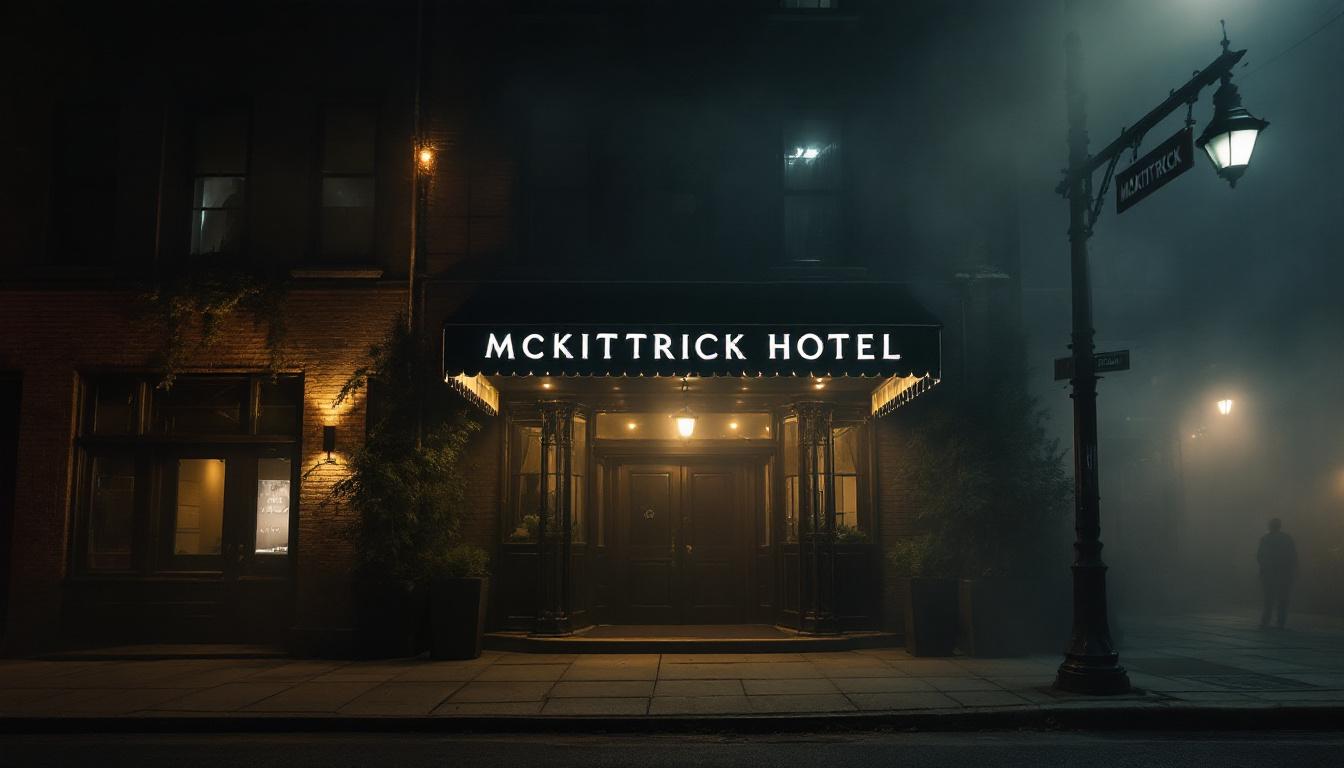
Entering the McKittrick for the first time is akin to stepping through the looking glass. A world unfolds—one where shadows whisper secrets, and each corner invites curiosity. Like many, I arrived late to this haunting affair, discovering Sleep No More only in 2024, just months before its final curtain call. Yet, in those brief encounters, I fell irrevocably under its spell.
The experience defies easy categorization. Inspired by Shakespeare's Macbeth and steeped in the noir aesthetic of the 1930s, the production casts aside the conventions of traditional theater. Rather than sitting passively in a seat, audience members don masks and wander freely through a meticulously crafted universe. Each room within the McKittrick is its own narrative microcosm, revealing fragments of the story through evocative, wordless performances.
The genius of Punchdrunk's creation lies in its ability to transform the audience from mere observers into active participants. Every choice—to follow an actor down a dimly lit corridor, to linger over a cryptic letter, or to simply pause and absorb the ambiance—shapes the individual journey. In this way, Sleep No More becomes not just a show to watch, but a world to inhabit.
Beyond its immediate impact, the legacy of Sleep No More extends far beyond the confines of the McKittrick Hotel. It was a revolutionary force in the evolution of immersive theater, paving the way for countless productions that sought to dissolve the barriers between performer and spectator. By inviting audiences into a living, breathing narrative, it redefined what theater could be, inspiring both artists and audiences to rethink their roles in the theatrical experience.
The community that formed around Sleep No More is a testament to its profound effect. Night after night, diverse crowds gathered—seasoned theatergoers and newcomers alike, drawn together by the shared desire to lose themselves in the enigmatic embrace of the McKittrick. Even as the final performance approaches, the sense of camaraderie among its devotees remains unbroken, a vibrant tapestry woven from countless individual stories.
This communal spirit was never more evident than during the three farewell APPARITIONS parties I attended, where the line between audience and performer blurred even further. Here, the McKittrick's many rooms seemed to pulse with the collective energy of those who had fallen in love with its mysteries. It was a celebration not only of what had been but of what will endure: the idea that theater can be as immersive and transformative as a dream.
As the McKittrick Hotel prepares to close its doors on Sleep No More, it leaves behind a legacy that will resonate for years to come. This singular production has challenged and expanded the horizons of theatrical storytelling, leaving an indelible mark on New York City's cultural landscape.
Though I discovered Sleep No More near its end, it quickly became a cherished experience—a reminder of the limitless possibilities of art. The McKittrick Hotel, with its labyrinthine halls and shadowy corners, remains a beacon of innovation, its story etched into the very fabric of the city it so captivatingly transformed. Even now, as its final echoes fade, the McKittrick's influence endures, a perpetual testament to the power of immersive theater to enchant, provoke, and inspire.