The obituaries were premature. For the better part of a decade, the conventional wisdom about Chelsea's gallery district held that the neighborhood was in terminal decline — hollowed out by rising rents, challenged by the Lower East Side and Tribeca, and made increasingly irrelevant by a global art market that had shifted its center of gravity to Basel, Hong Kong, and the digital platforms that were supposed to make physical gallery spaces obsolete. The evidence for this narrative was real. Several major galleries relocated from Chelsea during the 2010s, and the ground-floor spaces along Tenth and Eleventh Avenues showed a higher vacancy rate than at any point since the district's formation in the early 1990s.
The evidence for the counter-narrative is now equally real, and it is visible on any Thursday evening between 6 and 8 PM along the blocks that constitute the densest concentration of contemporary art galleries in the Western Hemisphere. Chelsea in the fall of 2024 is experiencing a renaissance that few predicted and that the art world is still processing. New galleries have opened at a pace not seen since the district's initial boom. Foot traffic at existing galleries has increased. And the quality of the exhibitions — the work on the walls, the ambition of the programming — suggests that Chelsea's second act may be more interesting than its first.
The New Arrivals
The most visible indicator of Chelsea's revival is the wave of gallery openings that has transformed the district's roster over the past two years. At least fifteen new galleries have opened in Chelsea since the beginning of 2023, a rate of expansion that exceeds any comparable period in the district's history. The newcomers include both established dealers who have relocated from other neighborhoods and entirely new operations launched by a younger generation of gallerists who see Chelsea's infrastructure and reputation as assets rather than liabilities.
The new galleries tend to be smaller than the mega-spaces that defined Chelsea in its peak years — the era when Gagosian, Pace, and David Zwirner occupied cavernous ground-floor spaces that could accommodate installation art at an architectural scale. The current arrivals occupy more modest footprints, often on the second or third floors of the same buildings that the larger galleries call home. The reduction in scale reflects both the economic reality of Chelsea rents and a curatorial preference for intimacy over spectacle.
Among the most talked-about newcomers is a cluster of galleries on West 22nd Street that have collectively transformed a previously quiet block into one of the district's most dynamic corridors. These spaces, run by dealers in their thirties and early forties, share an emphasis on emerging and mid-career artists whose work engages with questions of identity, technology, and urban space. The programming is ambitious and unapologetically intellectual, but the atmosphere is welcoming in a way that the more established Chelsea galleries have not always managed to be.
The Anchor Institutions
The revival is anchored by the continued presence of the district's most established galleries, which have recommitted to Chelsea after periods of expansion elsewhere. Gagosian, which operates two massive spaces on West 24th Street and West 21st Street, has mounted an aggressive exhibition schedule that has drawn record attendance. Pace Gallery, whose flagship 25th Street space is one of the largest commercial galleries in the world, has invested in major institutional-quality exhibitions that function as de facto museum shows. David Zwirner, Hauser & Wirth, and Lisson Gallery continue to maintain their Chelsea presences alongside their locations in other cities and neighborhoods.
The relationship between the anchor galleries and the newcomers is more symbiotic than competitive. The major galleries draw collectors and curators to Chelsea, and those visitors inevitably discover the smaller spaces on adjacent blocks. Several established dealers have made a point of directing visitors to newer galleries whose programs they admire, recognizing that Chelsea's value as a destination depends on the density and diversity of its offerings rather than on the dominance of any single operation.
The stability of these anchor institutions matters because it provides the gravitational pull that holds the district together. A collector or curator visiting New York will always come to Chelsea if the major galleries are showing compelling work. Once they are in the neighborhood, the proximity of dozens of smaller galleries creates the browsing dynamic — the serendipitous discovery of unfamiliar work in an unfamiliar space — that is Chelsea's most distinctive feature and its greatest competitive advantage.
The programming at both the major and the emerging galleries has reflected a confidence that was notably absent during the years of supposed decline. The fall 2024 season included several exhibitions that generated significant critical attention and commercial activity. The willingness of galleries to mount ambitious, expensive, and not obviously commercial exhibitions suggests a belief in Chelsea's long-term viability that extends beyond short-term financial calculation.
The Real Estate Equation
No discussion of Chelsea's gallery district can avoid the question of real estate. The neighborhood's art ecosystem has always existed in tension with the broader forces shaping Manhattan's commercial property market. During the mid-2010s, that tension threatened to destroy the district entirely, as landlords converted gallery spaces to retail or residential use and rents climbed beyond what most dealers could sustain. The corrective came from an unlikely combination of factors: the softening of the Chelsea commercial market during the pandemic, the completion of several large development projects that added ground-floor commercial space to the neighborhood, and a growing recognition among property owners that galleries are desirable tenants who attract foot traffic and cultural cachet.
Several landlords have begun offering gallery-specific lease terms that reflect the unique economics of the art business, including lower base rents with percentage-of-sales escalators and longer lease terms that give dealers the stability needed to invest in their programs. These arrangements are not acts of philanthropy; they reflect a calculation that a vibrant gallery district increases the value of the surrounding real estate more effectively than any alternative use of the ground-floor spaces.
The Thursday Night Ritual
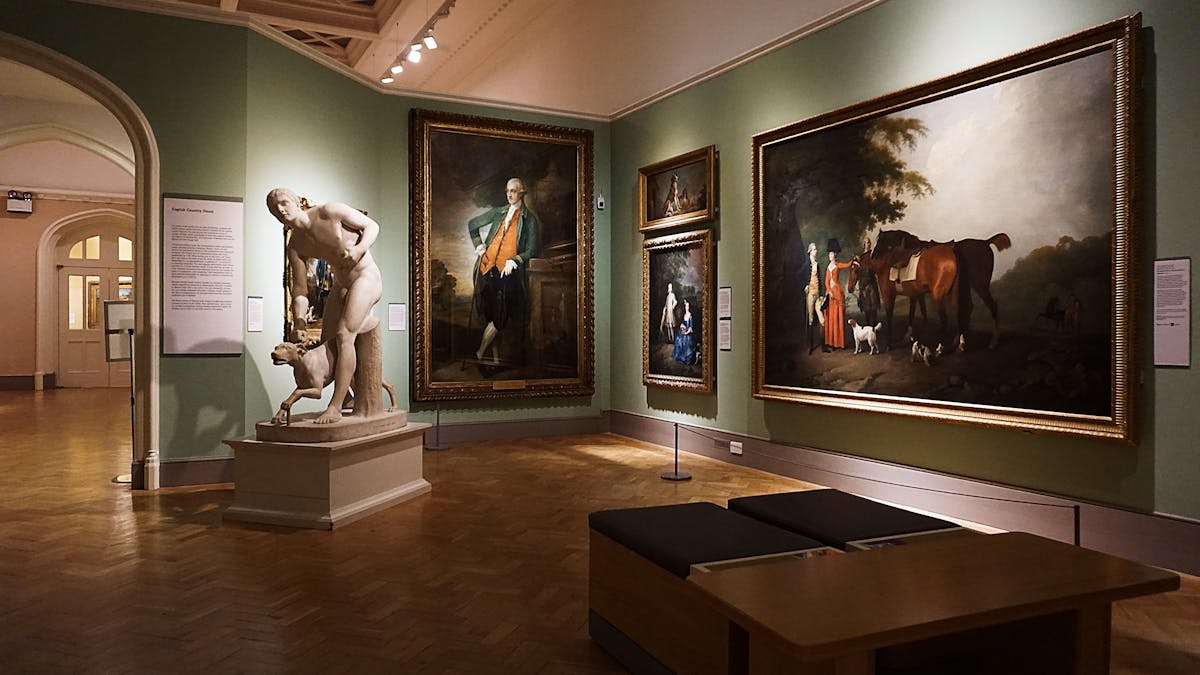
The Thursday evening opening reception remains the social and commercial engine of Chelsea's gallery ecosystem. On a typical Thursday during the fall season, a visitor can start at the southern end of the district around 19th Street and walk north to 27th Street, stopping at a dozen or more openings along the way. The experience is free, the wine is usually adequate, and the opportunity to see new work by established and emerging artists in the spaces where they are meant to be seen is unmatched by any other format.
The Thursday night crowd has diversified in recent years. The core audience of collectors, curators, critics, and artists remains, but it has been joined by a broader public that includes students, creative professionals from adjacent industries, and neighborhood residents who treat the gallery walk as a cultural amenity. The increased foot traffic has been welcomed by galleries that had, during the lean years, sometimes felt that they were showing work to empty rooms.
The Digital Question
Chelsea's revival has coincided with the deflation of the NFT bubble and a broader reckoning with the promise of digital art platforms. The prediction that virtual galleries and blockchain-based art markets would render physical exhibition spaces obsolete has not materialized. If anything, the collapse of the NFT market has reinforced the value of the physical gallery experience — the encounter with a work of art in a carefully lit space, the conversation with a knowledgeable dealer, the tactile reality of paint on canvas or steel in three dimensions.
This is not to say that Chelsea's galleries have ignored technology. Most have developed sophisticated online viewing rooms and maintain active social media presences that extend their reach far beyond the physical neighborhood. But these digital platforms function as complements to the in-person experience rather than replacements for it. The gallery visit remains the irreducible core of the business, and Chelsea remains the place where that visit is most richly available.
Chelsea's gallery district is not what it was in 2005, when the sense of possibility was unlimited and the money seemed to flow without friction. It is something more mature, more deliberate, and in some ways more interesting. The neighborhood has weathered the challenges that threatened to undo it and emerged with a clearer sense of its identity and its value. The galleries are open. The work is on the walls. The Thursday night walk is as good as it has ever been.