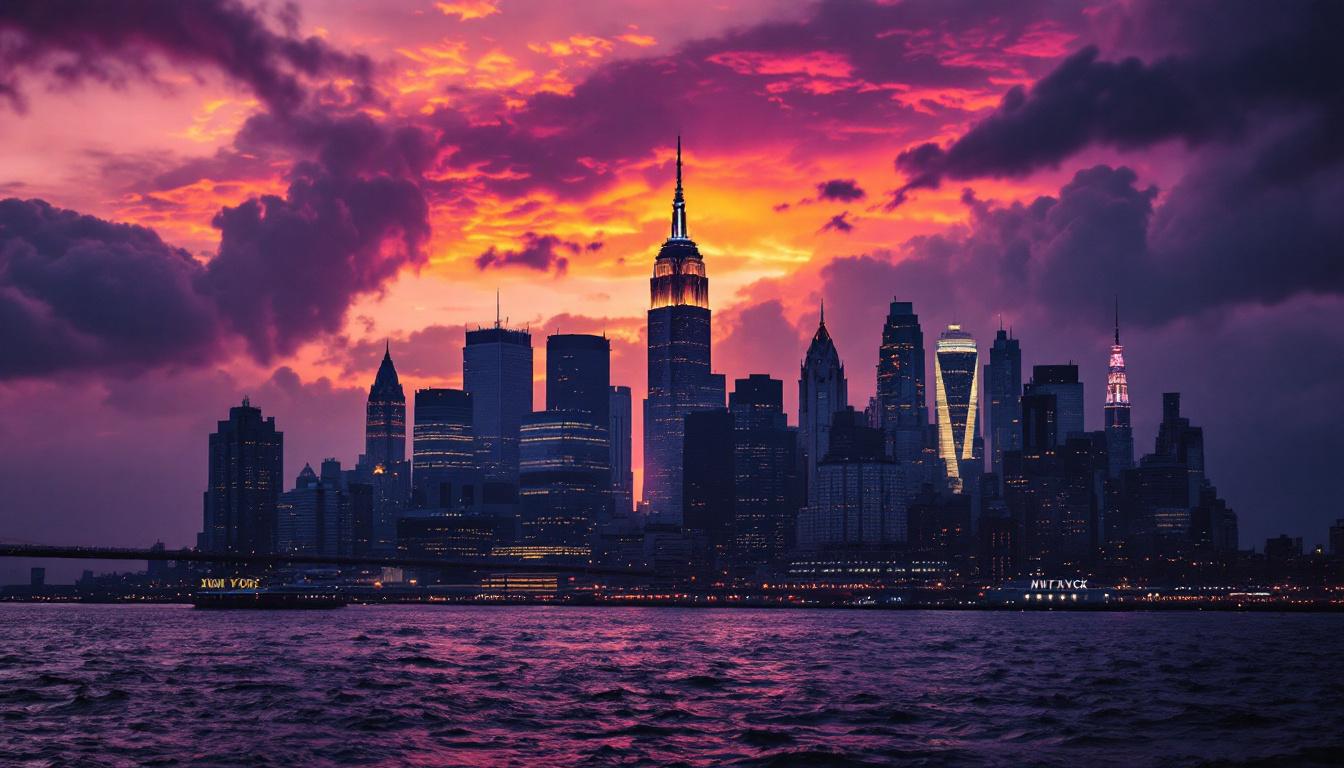
In the world of speculative fiction, few authors have managed to weave as intricate and compelling a tapestry as N.K. Jemisin has with her Hugo Award-winning novel, "The City We Became." This ambitious work transforms New York City into a living, breathing entity, offering a narrative where the city's boroughs take on personified roles, each imbuing their unique characteristics into the fabric of the story. As Jemisin's characters fight to save the very essence of their city, readers are invited to explore New York through a lens that is both fantastical and deeply rooted in the real socio-political landscape of contemporary urban life.
"The City We Became" is not merely a fantasy novel but a love letter to New York City itself, revealing its complexities and contradictions through a story that pulsates with the city's vibrant energy. Jemisin's deft storytelling transforms New York from mere setting to protagonist, exploring the idea that cities, much like people, have souls that can be wounded, healed, and even reborn.
Jemisin presents each of the five boroughs—Manhattan, Brooklyn, Queens, the Bronx, and Staten Island—as avatars, characters who embody the distinct spirit and struggles of their respective territories. Through these avatars, Jemisin explores issues of race, gentrification, and cultural identity, all with her signature blend of social commentary and rich world-building. Each borough's persona is a reflection of its unique demographic and cultural history, and together they form a composite picture of New York, both its grandeur and its grit.
The novel’s premise hinges on a fantastical invasion by an otherworldly entity seeking to erase New York from existence. This threat, represented by a mysterious and sinister Woman in White, brings to the forefront the challenges faced by the city's diverse communities. The story unfolds with a sense of urgency that mirrors the real-life pressures of urban living, as the avatars must unite to confront a force that exploits division and fear.
Jemisin’s portrayal of these avatars is particularly striking. Manhattan, sleek and ambitious, grapples with the complexities of privilege and power. Brooklyn, with its rich history of art and activism, represents resilience and the fight against cultural erasure. Queens, a beacon of multiculturalism, embodies innovation and the strength found in diversity. The Bronx, often marginalized, is depicted as fiercely proud and resourceful. Staten Island, isolated and often misunderstood, reflects themes of alienation and the struggle for acceptance.
By anthropomorphizing these boroughs, Jemisin gives voice to the myriad of experiences that comprise New York City. Her narrative is both a celebration and critique, acknowledging the beauty of diversity while never shying away from the systemic issues that threaten it. The avatars’ journey is one that demands unity in the face of division, underscoring the necessity of community in combating external threats.
"The City We Became" also serves as a poignant metaphor for the power dynamics intrinsic to urban environments. The Woman in White’s attempts to sow discord among the boroughs reflect real-world tensions, highlighting how easily fear can fracture communities. Yet, through cooperation and understanding, the avatars demonstrate that the city's true strength lies in its ability to come together, despite its differences.
Jemisin's narrative prowess ensures that "The City We Became" resonates beyond the confines of genre fiction. It prompts readers to question what it means to belong to a place and challenges them to consider their role in shaping the future of their communities. The novel’s closing scenes leave readers with a hopeful yet sobering reminder of the ongoing battle for identity and survival in an ever-evolving metropolis.
As we delve into the pages of "The City We Became," we are reminded of the indomitable spirit of New York City—a city that, much like Jemisin’s avatars, continues to endure, adapt, and thrive against all odds. The novel stands as a testament to Jemisin's extraordinary talent as a storyteller and her profound understanding of the urban experience, making it an essential read for anyone who has ever felt the magnetic pull of New York.