Paul Tremblay and the New Wave of Literary Horror
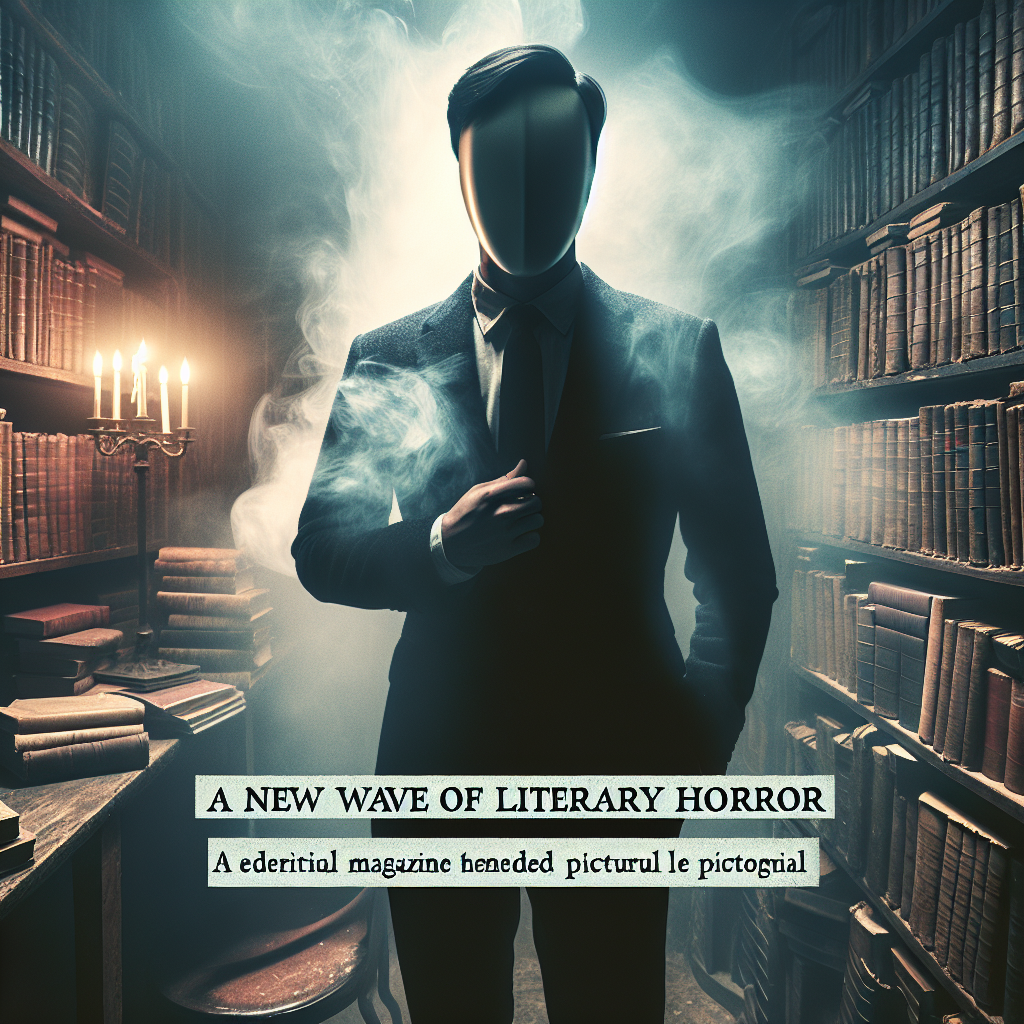
In recent years, the landscape of horror literature has experienced a renaissance, with authors like Paul Tremblay at the forefront, ushering in what can only be described as the New Wave of Literary Horror. This movement is not just a resurgence; it's a reinvention that transcends traditional boundaries of the genre, blending psychological depth with existential dread to create narratives that resonate on both an intellectual and emotional level.
Paul Tremblay, known for his critically acclaimed works such as "A Head Full of Ghosts" and "The Cabin at the End of the World," has emerged as a pivotal figure in this evolution. His stories often eschew straightforward horror tropes, instead opting for a blend of ambiguity and realism that leaves readers questioning the nature of reality itself. Tremblay's ability to weave psychological complexity with elements of the supernatural has earned him a place not only on bestseller lists but also within the annals of contemporary literary fiction.
What sets Tremblay apart from his peers is his distinctive approach to horror. His narratives often focus on the human psyche, exploring themes of paranoia, familial dysfunction, and the fragility of memory. Tremblay's protagonists are frequently unreliable narrators, navigating a world where the lines between reality and illusion blur—a reflection of the author's own fascination with the human mind's capacity to interpret and misinterpret experiences.
This psychological depth is apparent in "A Head Full of Ghosts," where he delves into the effects of a possible demonic possession on a family, unfolding the story through the lens of reality television and media sensationalism. The novel is as much a critique of modern culture and the voyeuristic tendencies of society as it is a horror story. Tremblay's work resonates on multiple levels, invoking fear not through gore or shock, but through the unsettling possibility that our perceptions are inherently flawed.
Furthermore, Tremblay's narratives often leave readers with lingering uncertainty. His refusal to provide clear answers is a hallmark of the New Wave of Literary Horror. Instead of offering closure, Tremblay invites discourse, encouraging readers to question and interpret his stories through their own lenses. This open-endedness is crucial to his work's enduring appeal and critical acclaim, as it challenges the audience to engage actively with the text.
The impact of Tremblay's work is evident in the growing community of authors who are following in his footsteps, contributing to the genre's evolution. Writers such as Silvia Moreno-Garcia and Carmen Maria Machado are part of this new cohort, exploring horror through unique cultural and personal perspectives, thus expanding the genre's thematic and emotional breadth. This new wave is characterized by its diversity and inclusivity, welcoming voices that have historically been marginalized in literary circles.
Tremblay's influence extends beyond his novels themselves. As a vocal advocate for the horror genre, he frequently participates in literary panels, discussions, and workshops, fostering a community of writers and readers who are passionate about the potential of horror to explore complex truths about the human condition. His advocacy for the genre emphasizes its validity as a platform for serious literary exploration, pushing back against stereotypes that have long pigeonholed horror as mere escapism or niche entertainment.
Critical reception of Tremblay’s work is a testament to this shift in perception. His novels have received accolades not just from genre-specific awards, but from broader literary circles as well, showcasing a growing recognition of horror's potential to be both commercially successful and critically respected. This acceptance is crucial, as it paves the way for innovative storytelling that challenges genre conventions.
As literary horror continues to gain momentum, Paul Tremblay's contributions remain seminal. His unique blend of psychological and supernatural elements, coupled with his refusal to succumb to predictability, has invigorated the genre, opening the door for new voices and narratives. The New Wave of Literary Horror is not just about fear; it's about confronting the unknown, exploring the human psyche, and ultimately, understanding our place in an often incomprehensible world. Tremblay's work exemplifies this ethos, making him a cornerstone of a genre that is as intellectually stimulating as it is terrifying.