The plywood went up almost overnight. Within weeks of Governor Cuomo's executive order banning indoor dining on March 16, 2020, the streets of Manhattan and Brooklyn were transformed by an improvised architecture of survival. Restaurants that had spent years perfecting their interiors suddenly found themselves building makeshift dining rooms on sidewalks, in parking spaces, and in the middle of streets that had been closed to traffic. The result was chaotic, beautiful, occasionally absurd, and entirely without precedent in the modern history of New York City dining.
The Open Restaurants program, which the city announced in June, gave formal blessing to what was already happening informally. Restaurants could apply for temporary permits to set up outdoor seating in their adjacent roadway and sidewalk space. The application process was streamlined to the point of being almost nonexistent — a concession to urgency that would later generate controversy but in the moment was received with overwhelming gratitude by an industry facing mass extinction.
The Street as Dining Room
What emerged was a street life that New Yorkers had never experienced. On Smith Street in Boerum Hill, on Bedford Avenue in Williamsburg, on Restaurant Row in midtown, the car lanes filled with tables. Restaurants that had operated for years behind closed doors were suddenly open-air operations, their kitchens visible from the street, their energy merging with the life of the sidewalk. The effect was Mediterranean in character, a sidewalk cafe culture that New York had long admired from a distance but never managed to replicate.
The structures themselves ranged from the minimal to the architectural. Some establishments set out folding tables and plastic chairs, the functional minimum. Others invested tens of thousands of dollars in custom-built enclosures with heating, lighting, and decor that rivaled their indoor spaces. On the Lower East Side, the team behind a popular cocktail bar constructed a cedar-and-glass pavilion that became a neighborhood landmark. In the West Village, a Italian restaurant built a vine-covered pergola that could have been transported from a piazza in Florence.
The Cocktail Revolution
The bar industry faced its own existential challenge. Cocktail culture, which had reached extraordinary heights of sophistication in pre-pandemic New York, was built on the intimate, controlled environment of the bar room: the dim lighting, the carefully calibrated acoustics, the theater of the bartender's craft. None of this translated easily to a folding table on a windy sidewalk.
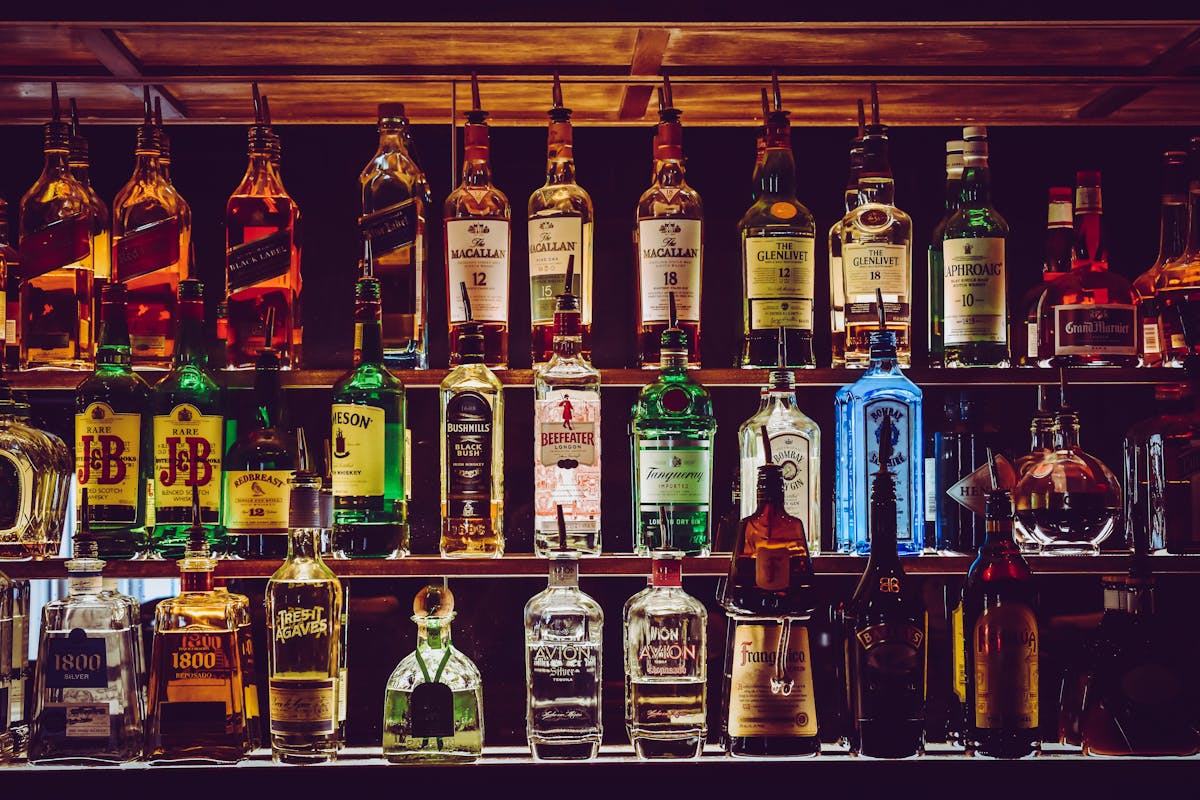
The response was to simplify, standardize, and bottle. Bars that had built reputations on elaborate made-to-order cocktails pivoted to batched drinks sold in bottles and cans for takeout. Death & Co, the East Village institution that had helped ignite the craft cocktail renaissance, began selling its signature cocktails in 750ml bottles. Attaboy on Eldridge Street, known for its bespoke, menu-free approach, created a curated selection of pre-mixed drinks. The pivot required a philosophical adjustment as much as a logistical one: the acceptance that perfection, in the moment, mattered less than survival.
The Toll
Not everyone survived. The New York City Hospitality Alliance estimated that by September 2020, more than 1,000 restaurants and bars had closed permanently. The losses cut across every price point and neighborhood. Beloved neighborhood institutions, decades-old family operations, and ambitious newcomers alike fell to the combination of lost revenue, ongoing rent obligations, and the fundamental uncertainty about when — or whether — normal service would resume.
The closures were not evenly distributed. Neighborhoods with narrow sidewalks and limited street space had fewer options for outdoor dining. Communities in the outer boroughs, which received less media attention and fewer charitable donations than their Manhattan counterparts, suffered disproportionately. The inequities of the city's restaurant landscape, which had always existed but were easy to ignore in boom times, were laid bare by the crisis.
For those that survived, the experience left permanent marks. Many operators reported a fundamental shift in how they thought about their businesses. The fragility that the pandemic exposed — the razor-thin margins, the dependence on a single revenue model, the vulnerability to external shocks — prompted a wave of diversification. Restaurants that had never considered takeout built delivery operations. Bars that had relied exclusively on drink sales began offering food. Establishments that had been open seven nights a week scaled back to five, preserving the mental health of staff who had been pushed to the breaking point.
The outdoor dining structures remain. What started as an emergency measure has become a permanent feature of New York's streetscape, codified into law in 2023 after years of debate. The city's relationship with its sidewalks and streets was fundamentally altered by a crisis that forced everyone outside and, in doing so, revealed something that had been hiding in plain sight: New York is a better city when its restaurants spill onto the street.