The Art of Stiefvater: Her Illustrations and Visual Work
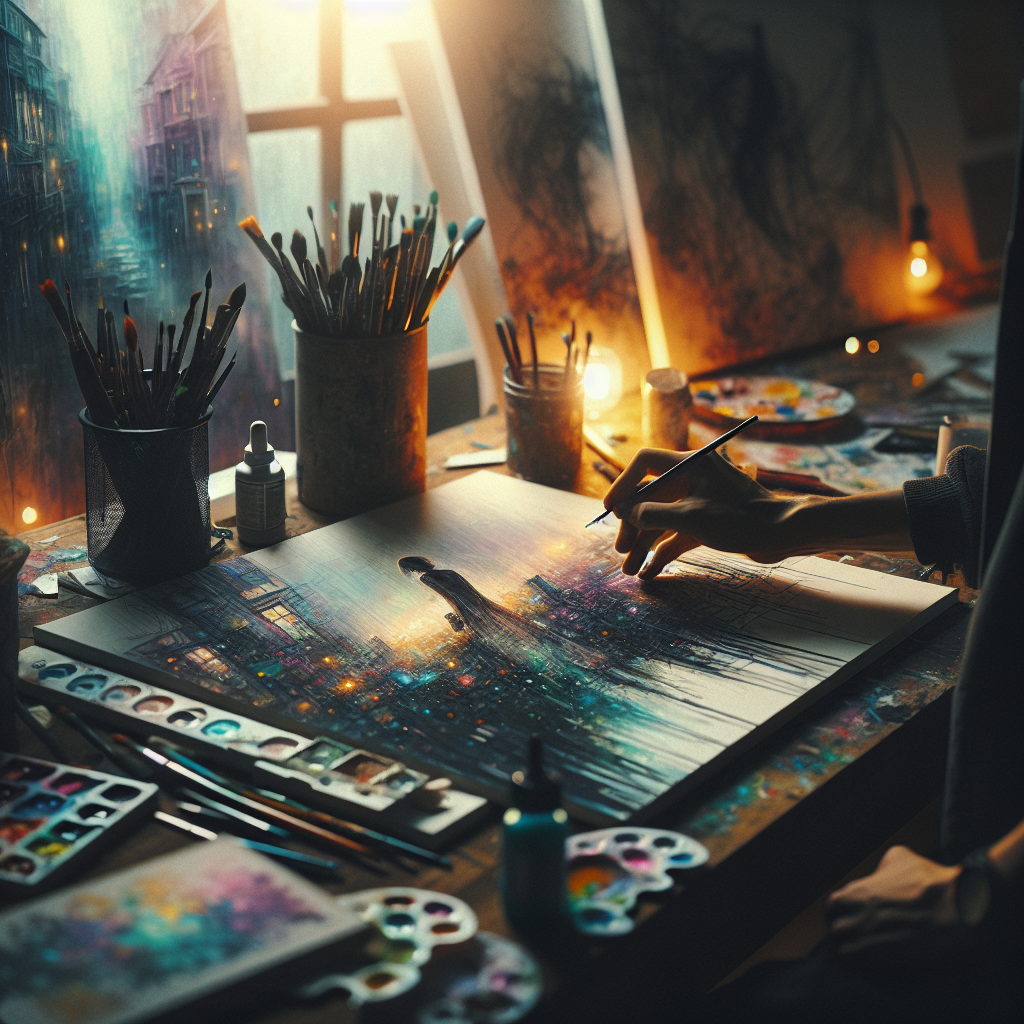
In the sprawling universe of young adult literature, where words alone often craft worlds, Maggie Stiefvater stands as a singular figure who bridges the perceived chasm between written and visual storytelling. While her narrative prowess earned her accolades and a fierce following, what often remains underappreciated is the visual artistry that complements her textual creations. Stiefvater, an accomplished author known primarily for her Raven Cycle and Shiver series, is also a gifted illustrator whose visual work provides an intimate window into the worlds she pens.
Stiefvater's illustrations are more than mere adornments to her narratives; they are integral to her storytelling process. Her art is a living testament to her belief in the symbiosis of text and image. The fluid lines, vivid colors, and attention to detail evident in her illustrations are reflective of the same meticulous care she applies to her writing. In a landscape where authors and illustrators are often distinct, Stiefvater defies convention by seamlessly melding both crafts. Her illustrations do not merely reflect the stories; they extend them, offering fans another dimension through which to experience her tales.
Tracing the evolution of Stiefvater’s visual artistry is akin to mapping the trajectory of her literary career. Early works, created during her time at the University of Mary Washington, exhibit an experimental edge indicative of an artist seeking her unique voice. Over the years, this voice has matured, evolving into a distinct style that is unmistakably her own. Her illustrations, like her novels, are characterized by a whimsical yet dark aesthetic, often portraying elements of fantasy grounded in reality—a hallmark of her writing.
One of the most striking aspects of Stiefvater’s visual work is her adeptness at capturing the essence of her characters. Each illustration serves as a snapshot of a moment, a mood, or an emotion that complements the text. For fans of her work, these illustrations are not merely visual representations; they are a direct line to the heart of the stories they love. Stiefvater’s process is deeply intertwined with her writing; she often sketches characters and scenes as she writes, using her art as both a guide and a source of inspiration.
In recent years, Stiefvater has expanded her visual repertoire beyond traditional illustrations, venturing into the realms of digital art and mixed media. This evolution is not just a testament to her versatility, but also to her willingness to embrace new technologies and methods to enhance her storytelling. Through platforms like Instagram, she offers her audience glimpses into her creative process, demystifying the art-making journey and fostering a deeper connection with her fanbase. This transparency is rare in an industry that often maintains a strict separation between the artist and their audience.
Stiefvater’s art is also notable for its ability to stand alone, independent of her books. Her pieces often find a home in exhibitions and galleries, where they are appreciated not just as extensions of her literary work, but as standalone pieces of art. This duality is a testament to her talent and her understanding of the interplay between different art forms. It also speaks to the broader trend of multimedia storytelling, where creators like Stiefvater are blurring the lines between traditional boundaries.
As we look towards the future, Stiefvater’s dual identity as both author and illustrator challenges the traditional confines of her roles. Her work invites both her peers and her audience to reconsider the potential of literature as an inherently visual medium. With her unique blend of narrative and illustration, Stiefvater not only enriches her own stories but also contributes to a broader dialogue about the nature of storytelling in the 21st century.
In a world where the visual often eclipses the textual, Stiefvater's work serves as a poignant reminder of the power of images to enhance and deepen storytelling. For readers and art lovers alike, her illustrations are an invitation to see beyond the words and discover a deeper, more nuanced understanding of her worlds. In the art of Stiefvater, we find a compelling case for the limitless potential of imagination and creativity, where every stroke of the pen and brush converges to create a narrative tapestry that is as vivid as it is immersive.