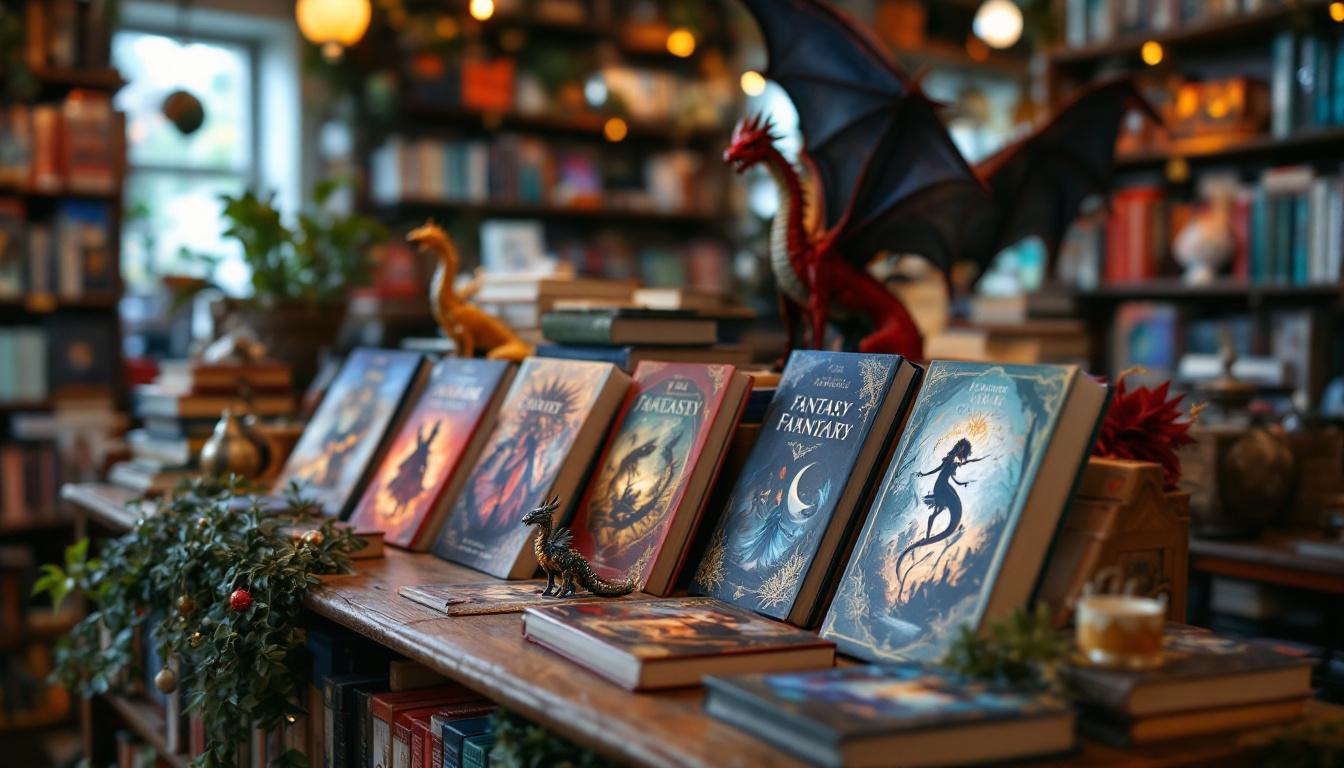
As autumn leaves blanket the city streets in hues of amber and gold, a different kind of transformation is sweeping through the world of literature. Fantasy fiction, long considered a niche genre relegated to the outskirts of the literary landscape, is experiencing a renaissance that is as unexpected as it is exhilarating. No longer confined to the realms of dragons, wizards, and mythical creatures, fantasy is blending with reality, offering readers a spellbinding escape that resonates with the complexities of contemporary life.
The resurgence of fantasy in modern fiction is not merely a trend but a phenomenon rooted in the genre's profound adaptability and timeless appeal. Authors are crafting intricate worlds that reflect and reshape the real one, engaging readers who seek both escapism and reflection. This new wave of fantasy is characterized by a diversity of voices and perspectives, defying traditional boundaries and challenging the conventions that once defined the genre.
At the forefront of this movement are authors such as N.K. Jemisin, whose groundbreaking work has redefined what fantasy can achieve. Jemisin's "The Broken Earth" trilogy, which concluded with "The Stone Sky" in 2017, has been lauded for its complex characters and sophisticated themes, earning her three consecutive Hugo Awards—an unprecedented feat. Jemisin's narratives, rich in cultural and social commentary, have opened doors for voices that were previously marginalized, allowing the genre to explore issues of race, identity, and power dynamics in innovative ways.
Similarly, novelists like Marlon James and R.F. Kuang are pushing the boundaries of fantasy by drawing from non-Western mythologies and histories. James's "Black Leopard, Red Wolf," often described as an African "Game of Thrones," weaves together African folklore with a visceral narrative that challenges Western-centric perceptions of fantasy. Kuang's "The Poppy War" trilogy, inspired by Chinese history and mythology, delves into themes of colonialism, war, and personal transformation, resonating deeply with a global audience.
This fantasy renaissance is also driven by the genre's expansion into multimedia platforms, where adaptations for television and film bring these stories to even broader audiences. HBO's success with "Game of Thrones" demonstrated the immense potential for fantasy storytelling to captivate mainstream viewers. The series' conclusion in 2019 may have left a vacuum, but it also paved the way for new adaptations, such as the upcoming "The Wheel of Time" series on Amazon Prime Video and Netflix's "Shadow and Bone," both of which promise to explore their source material's rich tapestries with fresh perspectives.
Furthermore, the rise of self-publishing and digital platforms has democratized access to the publishing world, allowing new and innovative voices to emerge. Authors like Tamsyn Muir, whose "Gideon the Ninth" has captured imaginations with its unique blend of science fiction and fantasy, have leveraged these platforms to reach enthusiastic audiences and cultivate devoted fanbases.
The appeal of modern fantasy lies in its ability to address universal human concerns through the lens of the extraordinary. In a world marked by uncertainty and rapid change, fantasy offers more than just a retreat; it provides a framework through which to understand and critique the present. The genre's focus on world-building invites readers to explore new possibilities and question the status quo, fostering a sense of wonder and curiosity that is increasingly rare in a hyperconnected world.
Critically, the fantasy renaissance is not just a resurgence of interest but a transformation in the very fabric of the genre. It is characterized by an inclusivity that reflects the diverse realities of its readership, offering stories that resonate across cultural and geographical boundaries. As authors continue to experiment with form and narrative, blending fantasy with elements of science fiction, horror, and even historical fiction, the genre's potential seems limitless.
As we stand on the cusp of a new era in fantasy fiction, it is clear that the genre's evolution is far from over. The tales being told today are not only a testament to the creativity and resilience of writers but also a reflection of a world eager to embrace imagination as a tool for understanding. In the pages of these fantastical worlds, readers find not only escape but also empowerment—a chance to envision new futures and, perhaps, bring a little magic back into the everyday.