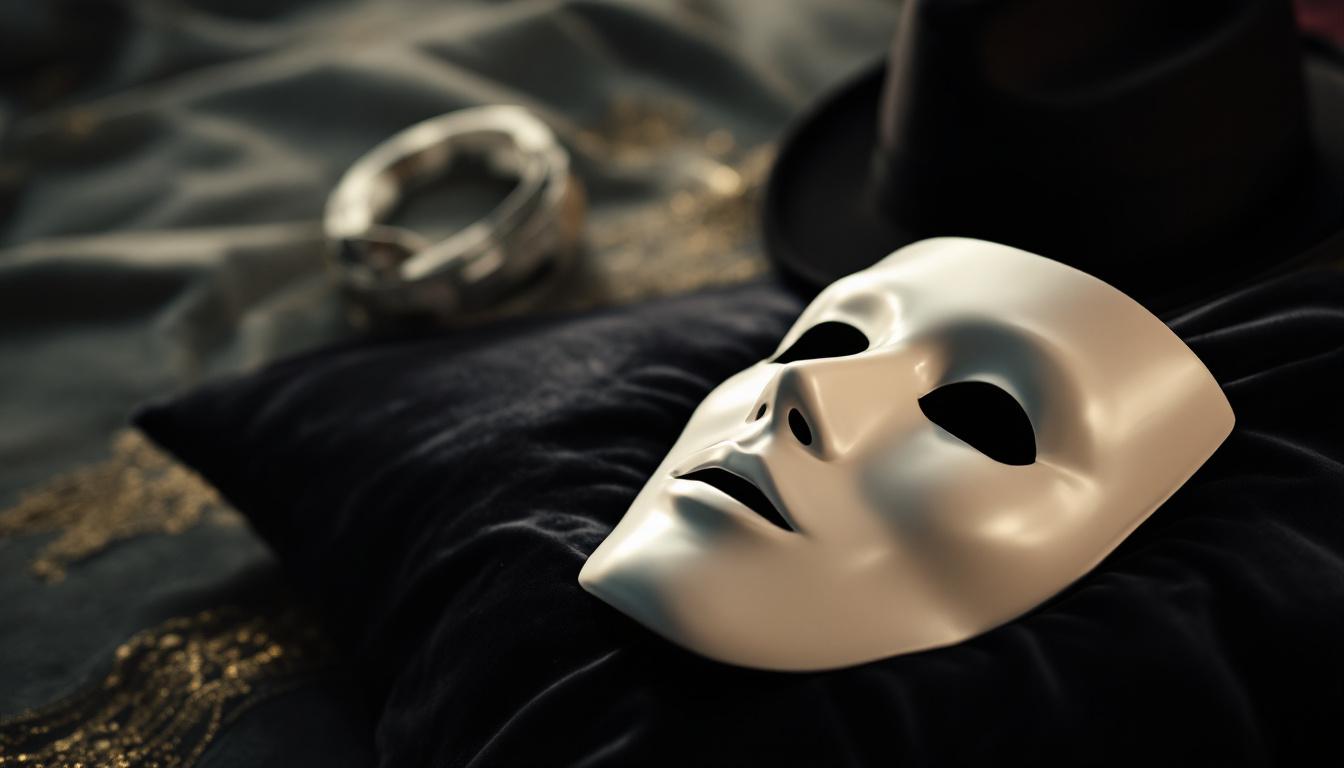
There is a moment at Life and Trust that happens before the show begins in any formal sense — before the story pulls you under, before you have chosen a character to follow, before you have any idea how long the next three hours are going to feel. You are handed your mask. And it is not what you expect.
Life and Trust does not use the large black horned carnival masks associated with its immersive predecessors. What you are given here is something altogether different: a large, black horned mask. Heavy. Architectural. Horned in a way that immediately codes the evening differently — not as anonymous audience member floating through a story, but as something stranger. Something that belongs to this world. Something with weight and shadow and a silhouette that says: you are not here to observe. You are here to be transformed.
The difference matters more than it might seem. The black horned mask of Sleep No More created a particular kind of invisibility — ghostly, neutral, almost clinical. The black horned mask of Life and Trust creates something closer to complicity. You are not a ghost in this world. You are a figure in it. And a horned figure, at that, moving through a building haunted by a Faustian bargain made generations ago, in a bank that was always also a temple to something darker than money.
The design choice is inseparable from the production's themes. Basil Conwell made a deal. The building holds the evidence. And now you wear the mark of it on your face. Every person in that space — every horned, black-masked figure moving through those six underground floors — becomes part of the visual language of the story. You are not separate from what is happening. You are woven into it.
There is also a practical dimension to this that reveals itself over repeat visits. The large black horned mask changes how you move through the space. It changes how performers see you, how you see yourself in the mirrors and reflective surfaces scattered throughout the building, how you feel when you find yourself standing alone in a room with a performer who has just noticed you. You are not invisible. You are present. You are there. And the mask is the reason the whole thing holds together as a unified world rather than a theater piece with an awkward audience problem.
On my first visit in September 2024, I did not fully understand what was on my face. By my tenth, I had stopped thinking about it at all. By my fiftieth, I understood it was one of the most precise design decisions in the entire production.