Before the drinks. Before the teller windows. Before anything else registers in the grand hall of Conwell Tower — there is the mural. The breathtaking, overwhelming, 1930s-style mural that dominates Conwell Coffee Hall is not decoration. It is a declaration. Every figure in it, every brushstroke, every allegorical detail is telling you something about the world you are about to enter — about power, about ambition, about what it cost to build an empire on a foundation of secrets. You could stand in front of it for twenty minutes on your first visit and still not have absorbed everything it contains. On your fiftieth visit, you are still finding new corners. The mural is the soul of Conwell Tower made visible, and it greets you the moment you walk in.
Before the drinks. Before the teller windows. Before anything else registers in the grand hall of Conwell Tower — there is the mural. The breathtaking, overwhelming, 1930s-style mural that dominates Conwell Coffee Hall is not decoration. It is a declaration. Every figure in it, every brushstroke, every allegorical detail is telling you something about the world you are about to enter — about power, about ambition, about what it cost to build an empire on a foundation of secrets. You could stand in front of it for twenty minutes on your first visit and still not have absorbed everything it contains. On your fiftieth visit, you are still finding new corners. The mural is the soul of Conwell Tower made visible, and it greets you the moment you walk in.
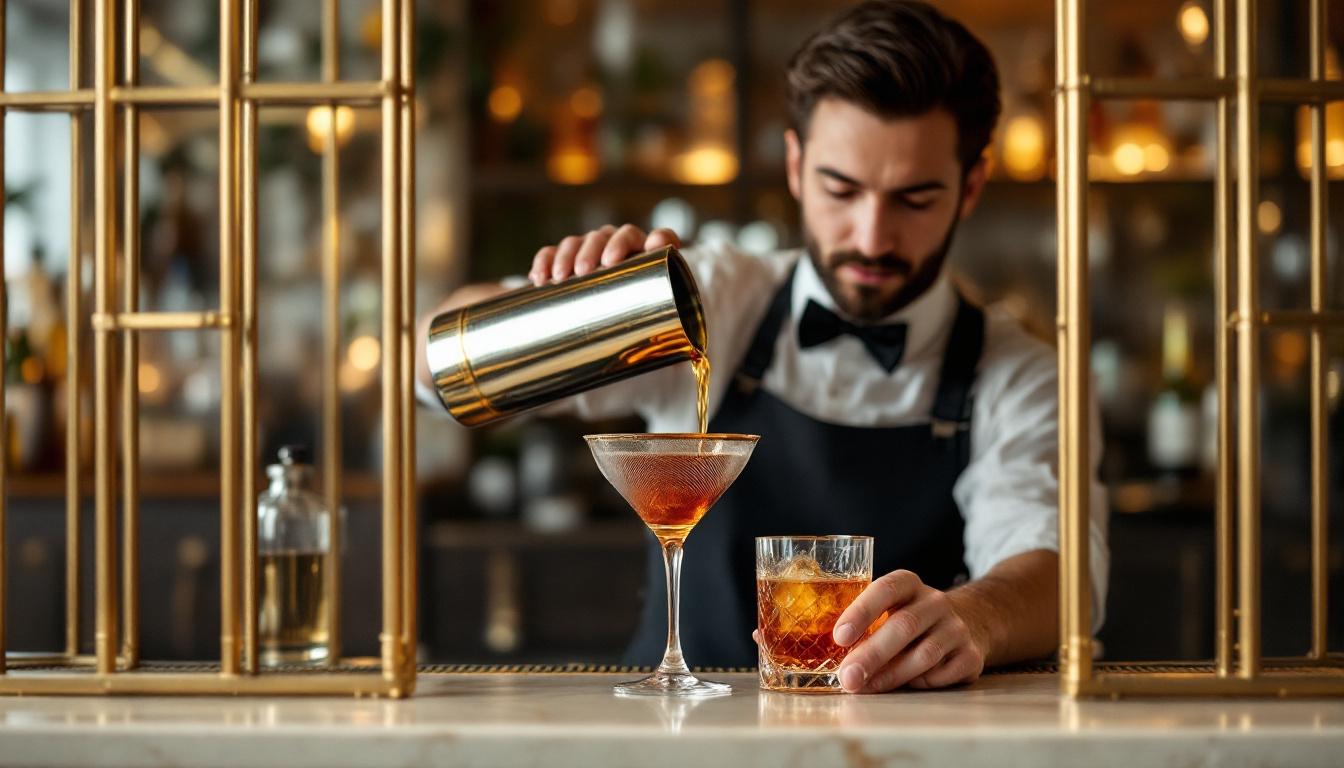
Upon entering the bar, visitors were met with the sight of lavish art deco splendor, a nod to the opulence of the late Roaring Twenties. The teller windows, repurposed from their original banking duties, served as entry points to another era, where a team of impeccably costumed mixologists crafted cocktails with the precision and flair of seasoned performers. Here, every drink told a story, each more tantalizingly cryptic than the last, enticing guests to linger a while longer in the gloom of October 1929.
The atmosphere was one of elegant foreboding. The sound of jazz, muted and mournful, drifted through the space, weaving itself into the conversations that ebbed and flowed like the tide. Patrons, whether seated on rich velvet stools or standing in clusters around the tables, all seemed actors in their own right, filling the room with the buzz of anticipation, as they speculated about the unfolding drama on the floors above and below.
The cocktails themselves were a testament to the cleverness and creativity of the culinary team. Each drink was named for an element of the show's Faustian narrative, a subtle invitation to delve deeper into the story's mysteries. The "Eternal Contract," a heady concoction of gin, chartreuse, and a hint of absinthe, teased the palate with its herbal complexity, while the "Golden Parachute" offered a bourbon-based balm to soothe any trepidation about the looming crash. There were whispers, too, of a secret menu, accessible only to those who dared to ask the right questions or offer the right tips.
The front-of-house staff, resplendent in their period costumes, moved with a grace that belied the frantic energy of the surrounding performance. They were as much a part of the world as the actors themselves, guiding guests with gentle authority, ensuring that each had their bearings before being swept away in the narrative's current. Their knowledge of both the drink menu and the intricate details of the show was commendable, a testament to their dedication to the world "Life and Trust" created.
Indeed, the Teller Window Bar was more than a mere interlude between scenes. It was an integral part of the immersive experience, a bridge between the audience's reality and the show's make-believe. It was a place where time seemed to stand still, allowing patrons to digest not just their cocktails, but the gravity of the narrative that enveloped them. The bar's role in the experience was a reminder that, even amidst the chaos of a story set on the brink of economic collapse, there was room for human connection and shared reflection.
As the experience of "Life and Trust" drew to an abrupt close in April 2025, the memory of the Teller Window Bar remains a poignant symbol of what made the show exceptional. The suddenness of the production's end, with little warning offered to the dedicated cast and crew, was a jarring reminder of the fragility of the arts. It was a disheartening finale for those whose livelihoods and passions were entwined with the production, leaving a void not just in the theater community, but in the hearts of those who experienced its magic.
The legacy of the Teller Window Bar, however, endures. It serves as a tribute to the innovation and dedication of those who, night after night, transformed a subterranean bank into a portal to another time. Let us raise a glass to the artisans, performers, and staff who made every evening at "Life and Trust" a spellbinding journey—one where the drinks came with a side of dread, and the memories lingered long after the final curtain fell.