The twentieth anniversary of the Tribeca Film Festival was never supposed to look like this. When Robert De Niro and Jane Rosenthal founded the festival in 2002 to help revitalize Lower Manhattan after September 11, they envisioned a traditional indoor cinema event that would draw audiences to the neighborhood's theaters and screening rooms. Two decades later, the festival that had become one of the most important in the American independent film calendar celebrated its milestone by going outside — not as a compromise, but as a reinvention that may have permanently altered the event's identity.
The 2021 Tribeca Film Festival, which ran from June 9 through June 20, featured outdoor screenings in all five boroughs for the first time in its history. The venues were deliberately chosen to reach communities that the festival had not traditionally served: the Waterfront Plaza at Brookfield Place in Battery Park City, Pier 76 in Hudson River Park, the Battery, and locations in Brooklyn, Queens, the Bronx, and Staten Island. The effect was to transform the festival from a neighborhood event into a citywide celebration of cinema, a democratic gesture that reflected both the practical necessities of the pandemic and a genuine desire to broaden the festival's audience.
Under the Stars
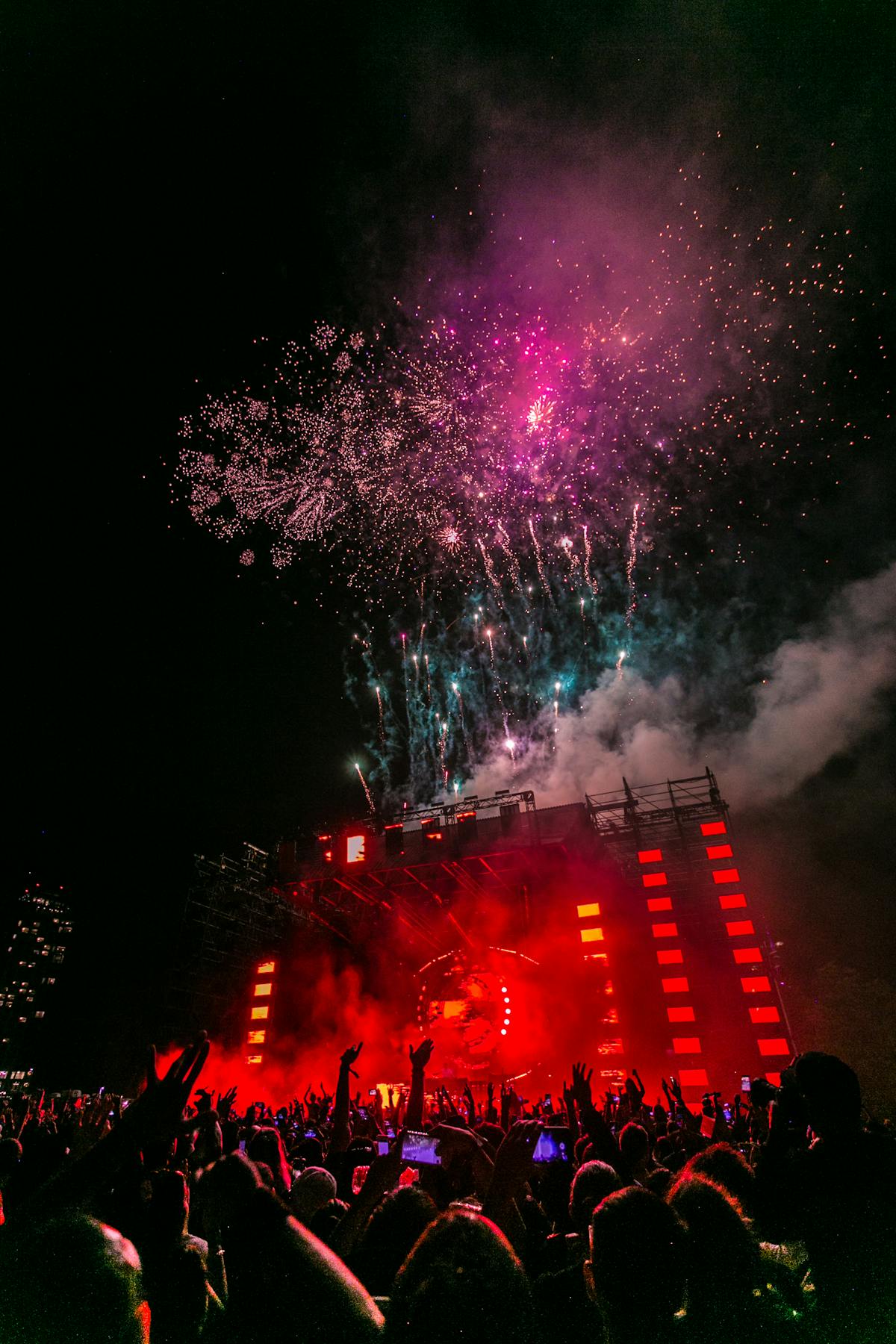
The centerpiece of the outdoor program was a series of evening screenings at the newly opened Pier 76, a massive concrete platform jutting into the Hudson River at West 34th Street. The space, which had previously served as a tow pound, was converted into an open-air cinema with a screen visible from blocks away and a sound system powerful enough to compete with the ambient noise of the West Side Highway. On opening night, the audience numbered over 2,000, spread across lawn chairs, blankets, and the concrete steps that bordered the viewing area.
The experience of watching a film outdoors, with the Manhattan skyline as a backdrop and the river breeze carrying the salt smell of the harbor, was qualitatively different from the traditional festival screening room. The films became part of the landscape, their images competing and collaborating with the visual spectacle of the city itself. During a screening of a documentary about New York street performers, a tugboat passing on the Hudson seemed to become part of the film. During a narrative feature set in Brooklyn, the distant lights of the borough were visible behind the screen, a visual echo that no theater could replicate.
The Five-Borough Experiment
The decision to program screenings in all five boroughs was both logistically ambitious and symbolically significant. Tribeca had long faced criticism — common to many New York cultural institutions — that it served a predominantly affluent, Manhattan-centric audience. The 2021 expansion was an explicit response to that critique. Screenings in the Bronx, at the historic Orchard Beach, drew audiences who had never attended the festival before. A program of short films in Staten Island's Snug Harbor Cultural Center introduced the festival to a community that, geographically and culturally, felt far removed from the world of independent cinema.
The programming reflected this broader ambition. Alongside the expected mix of independent features, documentaries, and prestige titles, the festival included a robust selection of community-oriented screenings: family-friendly programs in public parks, shorts programs curated by local filmmakers, and neighborhood-specific documentaries that spoke directly to the communities where they were shown. The effect was to create a festival that was simultaneously local and metropolitan, intimate and expansive.
The logistical challenges were considerable. Outdoor screenings are hostage to weather, and several events were disrupted by rain that forced last-minute relocations or cancellations. Sound management in open-air environments proved difficult, particularly at urban sites where traffic and construction noise were constant companions. The absence of the controlled screening-room environment — the darkness, the silence, the focused attention — changed the relationship between audience and film in ways that were sometimes productive and sometimes distracting.
The Future Model
Festival co-founder Jane Rosenthal described the 2021 edition as the beginning of a permanent evolution rather than a pandemic-era experiment. The outdoor screenings, she said, reached audiences that the festival's traditional venues had never attracted and created a communal film-watching experience that indoor theaters could not replicate. The plan going forward, she indicated, was to maintain a robust outdoor component alongside the traditional indoor screenings, creating a hybrid model that served both the serious cinephiles who wanted the optimal viewing environment and the broader public that wanted cinema as a shared urban experience.
The festival's twentieth anniversary was not what its founders had planned. It was, by many measures, something better: a demonstration that the form of the film festival, like the form of cinema itself, is more elastic than anyone had assumed. The films mattered, as they always do. But in 2021, the setting mattered just as much — the sky, the river, the city that had created the festival and that the festival, in its expanded form, was finally learning to fully embrace.